Dandelion Grow Guide — Beaverton, Oregon
Grow guide, plant care, troubleshooting, nutrition, minerals, vitamins, compounds, and ordering.
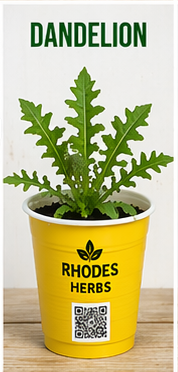
Growing Guide — Dandelion
- Sun: full sun to part shade (6+ hours of light).
- Water: moist but not soggy soil; dandelions tolerate dry spells once established.
- Soil: rich, loose, well-drained soil with compost mixed in; pH 6.0–7.5.
- Space: plants grow 6–12 inches tall and spread 8–12 inches; thin or space seedlings 8–12 inches apart.
- Container: deep pots or raised beds work well; the long taproot needs depth.
- When to plant: sow outdoors in spring after the last frost, or start seeds indoors 4–6 weeks before the last frost.
- Where to plant: sunny garden beds, raised beds, or large containers; it tolerates a wide range of soils.
- Harvest: pick young leaves for salads or teas, dig roots in fall after the first year for teas, and gather flowers in spring.
- Companion planting: dandelion's deep taproot brings up minerals, and its flowers attract pollinators.
Quick Growing Facts
- Sun: Full sun to partial shade depending on crop
- Soil pH: usually 6.0 – 7.5
- Water: keep evenly moist, not soaked
- Container: solo cup, tray, pot, raised bed, or garden bed
How to Grow
- Use loose, well-draining soil with compost mixed in.
- Keep young starts protected from extreme heat, cold, and drying out.
- Harden off starts before transplanting outdoors.
- Water at soil level when possible.
Soil, Water, Minerals & Feeding
- 50% quality potting soil
- 30% compost
- 20% perlite or aeration material
- Nitrogen supports green growth
- Calcium, magnesium, potassium, and phosphorus support healthy development
Fast Germination Method
- Keep seed-starting mix moist but not soggy.
- Use steady warmth and light after sprouting.
- Most seeds sprout best between 60-85°F depending on plant.
Troubleshooting
- Yellow leaves can mean low nitrogen, overwatering, or poor roots.
- Slow growth can mean weak soil, low light, or cold conditions.
- Wilting can mean underwatering, heat stress, or damaged roots.
Vitamins, Minerals & Compounds
Common vitamins: Vitamin A, Vitamin C, Vitamin K, folate, and small amounts of B vitamins.
Common minerals: potassium, calcium, magnesium, iron, phosphorus, and manganese.
Common compounds: fiber, chlorophyll, antioxidants, polyphenols, plant pigments, and plant-specific protective compounds.
Potential Health Support
- Supports better food variety
- Supports mineral and vitamin intake
- Supports digestive health through plant fiber
- Supports garden education and self-reliance
Traditional Use & Research
People have used dandelion for centuries as a food and in traditional herbal practice. The leaves and roots appear in teas, salads, and tinctures in European and Chinese traditions. The roots are often used as a coffee substitute after roasting, and the leaves provide vitamins A, C, and K, calcium, and potassium. Traditional uses include supporting digestion and liver health, but clinical evidence is still limited.
Education only — not medical advice.
Sources & Further Reading
References & Sources
- USDA FoodData Central
- National Institutes of Health nutrient fact sheets
- Harvard T.H. Chan School of Public Health nutrition resources
- Cleveland Clinic nutrition education resources
Important Disclaimer
This page is for educational and informational purposes only. It is not medical advice, diagnosis, or treatment. These statements have not been evaluated by the FDA.
Always consult a qualified healthcare provider before making changes to your diet, health routine, or use of herbs, especially if pregnant, nursing, taking medication, or managing a medical condition.